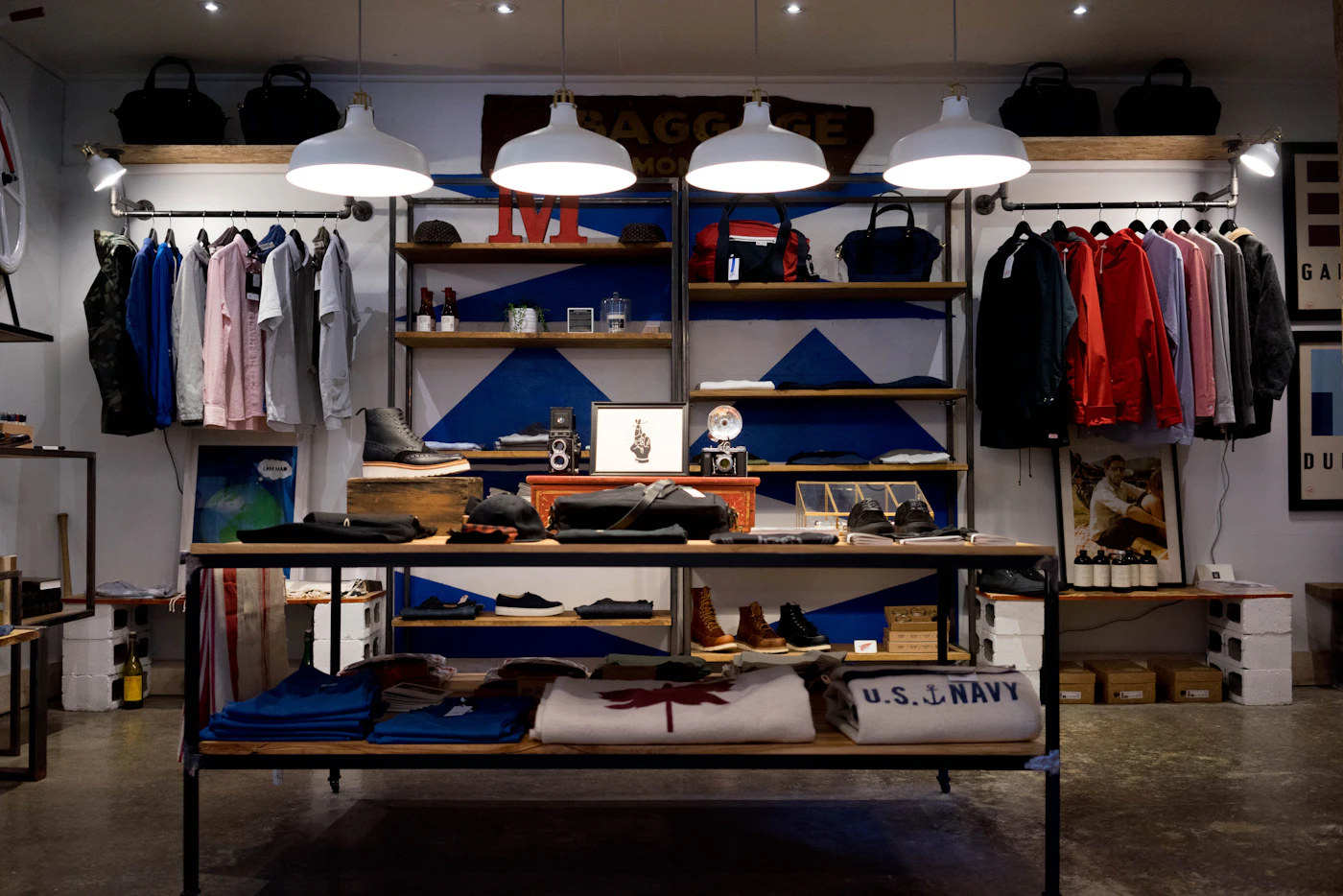
Photographic reference, not a Signal client project or a claim about the pictured location. Photo by Clark Street Mercantile on Unsplash.
A retail photo day needs a readiness decision for each frame. “The store opens Friday” does not establish that every room, display and sign will be ready for photography on Thursday.
Make a frame-level readiness ledger
Use ready, conditional and unavailable states. Attach each conditional state to an owner and an actual decision. This keeps a new opening date from becoming an unsupported promise about the photographable space.
| Frame | Needed before photography | If it is not ready |
|---|---|---|
| Storefront approach | Approved sign, clear permitted position, suitable light | Reorder the sequence or scope another access window |
| Orienting sales-floor view | Merchandising complete, temporary stock removed | Photograph an approved area; retain the missing view explicitly |
| Display detail | Current products and approved labels | Replace with an approved detail or defer |
| Fitting or consultation area | Finished room and permission to enter | Mark unavailable rather than inventing a finished room in editing |
The ledger describes dependencies, not a construction sign-off, an access certification or a guarantee that all conditions will be met.
Separate exterior and interior decisions
An exterior frame needs a recognizable approach and control of what is actually in view. An interior frame needs a useful explanation of the layout. The same time of day may not suit both. Discuss glass reflections, existing lighting and traffic before agreeing the sequence.
A passerby reflected in the window can become prominent in a photograph that looked empty at first glance. Review reflective surfaces and private screens as part of the frame check. Do not assume that photographing from outside grants access to a forecourt or permission to place production equipment wherever convenient.
Make the next step easy
Let's plan the photographs you need.
Share the date, goal, and budget. We’ll route you to a photographer whose experience fits the assignment.
Plan a business shoot at Signal VisualView property photography optionsFree inquiry. Review the creative professional, scope and quote before booking. Submitting an inquiry does not reserve a date.
Decide what people contribute
Choose between an empty spatial library, approved staff activity and a live shopping environment. Each has different coordination and permission needs. If the store remains open, name the contact who can resolve a conflict between customer service and the proposed picture. Keep routes and exits clear; a shoot plan is not permission to block them.
For an illustrative opening, the sales floor is complete but a fitting area still has tools and unfinished walls. The buyer can approve two ready-area views and leave the fitting area outstanding. A return visit may be a new cost and access requirement. Recording “three interiors delivered” after replacing the missing room with a second detail would conceal the original shortfall.
Agree what the files will explain
Pair each selected image with a store and area label. Identify website, press and brand-presentation uses, and separate paid campaigns or third-party uses for licensing discussion. Confirm final image count, editing scope and delivery timing in writing. Publishing a current opening announcement with an obsolete layout is an avoidable approval problem.
Our retail store photography brief turns this ledger into a business inquiry. Product SKUs, a launch party and a full video walkthrough are separate assignments. For a space that changes between booked configurations, compare the private-dining configuration checklist rather than treating every location as the same brief.
Check current NYC exterior production guidance and the actual building's requirements before the shoot. This checklist is an original planning example, not a real store opening, a legal determination or a claim of Signal client work.


